Skechers shoes divide foot health professionals. Some podiatrists recommend them for daily walking, while others consider them too unstable for prolonged use. This divergence is based on specific technical criteria: sole structure, arch support, heel stiffness. Comparing models and clinical feedback helps to understand why the same manufacturer generates such opposing opinions.
Skechers Range and Arch Support: Comparison of Sole Technologies
Not all Skechers models are equal in terms of podiatry. Confusion often arises from the fact that the brand markets dozens of references with very different sole technologies. The table below summarizes the characteristics of the main ranges from the perspective of foot support.
| Range | Sole Type | Arch Support | Medial Stiffness | Recommended Use |
|---|---|---|---|---|
| Classic Memory Foam | Soft memory foam | Low | Low | Light walking, short duration |
| Arch Fit | Sole with structured shank | Moderate to good | Moderate | Daily walking, standing |
| Go Walk (previous generation) | Soft foam, thick platform | Low | Low | Occasional use |
| Recent walking models (post-2023) | Medial reinforcements, less soft platform | Good | Moderate to good | Prolonged walking, caregivers |
Arch Fit models incorporate medial reinforcements and stiffer shanks than the earlier generations of memory foam. This technical evolution, documented by several Anglo-Saxon podiatrists between 2023 and 2025, marks a turning point in the clinical perception of the brand.
The older “memory foam” references, which were often criticized before 2020, remain on sale. A buyer who relies solely on the Skechers name without checking the range risks choosing a model unsuitable for their podiatric needs. The details of podiatrists’ reviews on the quality of Skechers confirm the necessity of distinguishing between ranges before any purchase.
Skechers and Plantar Fasciitis: What Clinical Feedback Shows
Plantar fasciitis is the most common reason for consultation when a patient asks their podiatrist if their Skechers are suitable. Feedback varies depending on the model worn.
Practitioners who observe improvement in their patients using Skechers almost always specify that it is from the Arch Fit range or recent models with a better-structured arch and a less soft platform. For patients suffering from mild plantar fasciitis or postural pain, these references provide measurable relief during prolonged standing.
On the other hand, models with very thick and soft soles pose a stability problem. A foot that sinks too deeply into the foam loses its proprioceptive cues. The muscular effort to maintain stability increases, which can exacerbate inflammation of the plantar fascia instead of relieving it.
Evaluation Criteria Used by Podiatrists
Foot professionals do not judge a shoe based on comfort felt during fitting. Their criteria are biomechanical:
- The stiffness of the heel counter, which must support the heel without compressing it. A soft counter allows the calcaneus to tilt into valgus
- The arch support, measurable by the resistance of the sole to manual twisting. A sole that twists easily does not stabilize the midfoot
- The drop (difference in height between heel and forefoot), which influences the load distribution on the posterior muscle chain
- The width of the shoe, often insufficient on some models for wide feet or deformed forefeet
A Skechers model that meets these four criteria (firm counter, supported arch, appropriate drop, sufficient width) generally receives a favorable opinion. The problem is that the majority of mainstream models do not meet these four conditions simultaneously.
French and Anglo-Saxon Podiatrists: Two Perspectives on the Same Shoe
One of the least documented aspects in popular articles concerns the geographical divergence of podiatric opinions. In France, a significant portion of podiatrists adopts a reserved stance on Skechers, emphasizing the lack of stability and the risk of ligament overstrain.
In contrast, in Anglo-Saxon countries (UK, USA, Australia), several podiatrists actively recommend recent ranges like Arch Fit for patients in prolonged standing. Health professionals and hospital podiatrists report that these models reduce fatigue in caregivers with a history of low back pain or heel pain.
This divergence is partly explained by different clinical traditions. French podiatry historically favors custom orthotics and is more cautious about ready-to-wear solutions. Anglo-Saxon podiatry integrates commercial shoes more into its prescriptions, provided there is regular follow-up.
Common Limitations Identified on Both Sides
Despite these differences in approach, French and Anglo-Saxon podiatrists agree on several points of caution:
- Skechers soles, even the most structured, do not replace a custom foot orthotic for advanced pathologies
- Regular replacement is necessary: foam loses its supportive properties more quickly than dense EVA soles used by other manufacturers
- A comfortable shoe during fitting is not necessarily biomechanically suitable, and this confusion remains the first trap for consumers
Choosing an Appropriate Skechers Model: Technical Criteria to Check
For a buyer who wants to wear Skechers without taking podiatric risks, the choice of model is more important than the choice of brand. The Arch Fit range is currently the most recommendable in terms of arch support.
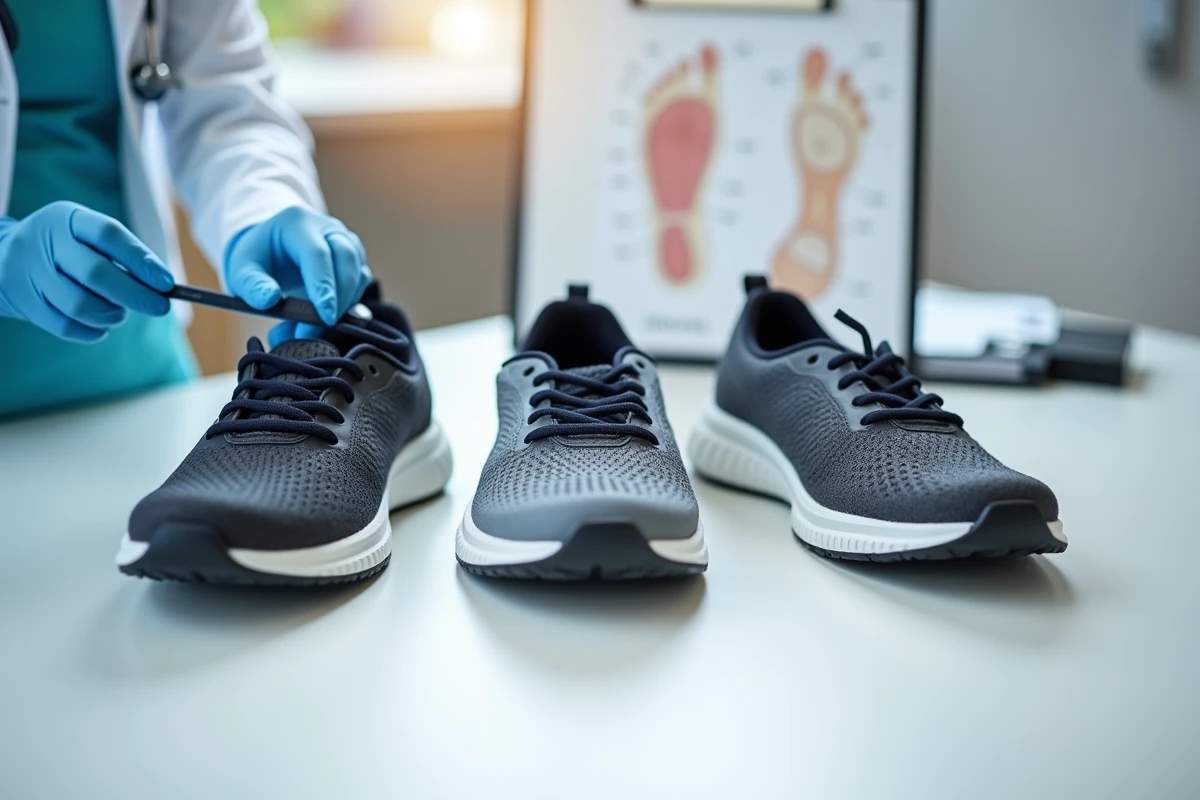
Before purchasing, test the sole’s torsion in-store: hold the shoe by the heel and forefoot, then try to twist it. If it twists easily like a rag, the medial support will be insufficient for prolonged walking. Also check that the heel counter resists lateral pressure from the thumb.
Individuals with an existing podiatric diagnosis (hallux valgus, excessive pronation, chronic fasciitis) benefit from consulting their podiatrist before changing shoes. A well-chosen recent Skechers model can accommodate a foot orthotic, provided the interior volume of the shoe allows it. The podiatrist can verify the compatibility between the orthotic and the shoe’s geometry, which no store salesperson does.