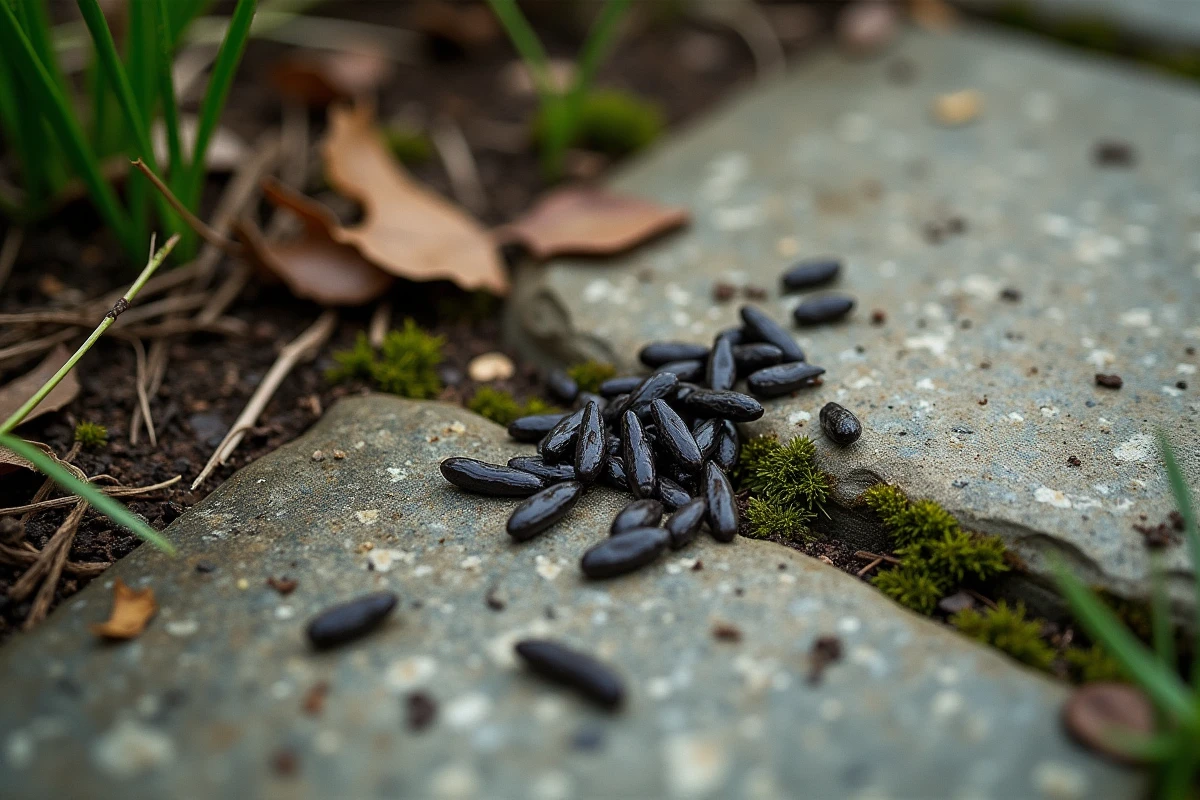
Snake droppings are a reliable ground indicator for assessing the faunal richness of a garden. Their morphology, location, and composition provide precise information about the species present and the state of the local food chain. Here, we detail the most discriminating identification criteria, common confusions with other reptile or mammal droppings, and management practices that promote the sustainable presence of snakes.
Composition and morphology of snake droppings: diagnostic criteria
A snake dropping is elongated, often slightly twisted, and ranges in color from dark brown to black. The solid part contains undigested residues: fragments of bones, scales, and fur from prey (micromammals, lizards, amphibians). These inclusions immediately distinguish it from droppings of similarly sized mammals (hedgehog, marten), which have a more homogeneous texture.
The other characteristic element is the presence of a whitish fraction at one end. This is urates, the reptilian equivalent of urine, excreted in a semi-solid form. This chalky white deposit is a reliable marker: no mammal in the garden produces this type of residue.
To recognize snake droppings in the garden, we recommend systematically cross-referencing three parameters: the twisted shape, the presence of urates, and the visible bone inclusions to the naked eye or with a magnifying glass.
Location of droppings: snake or viper, an underestimated behavioral criterion
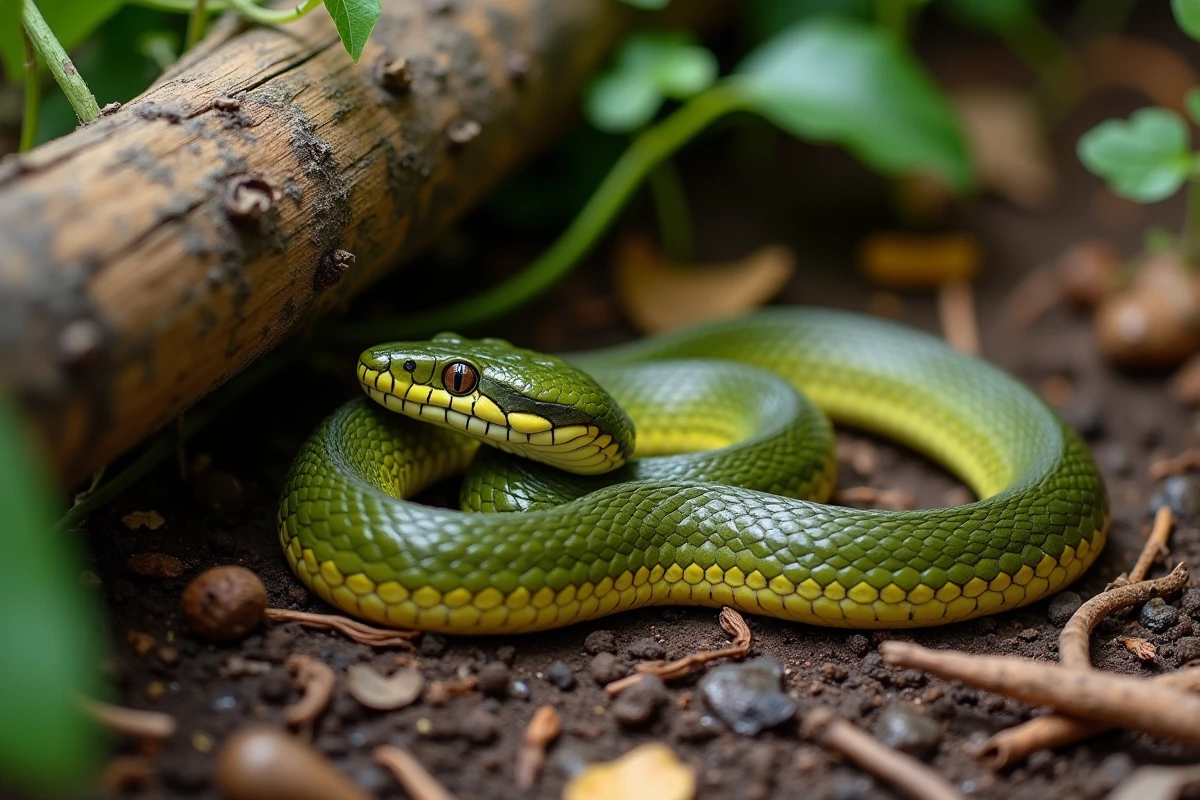
Morphology alone is not always sufficient to distinguish between a snake dropping and that of a viper. The criterion of location provides a determining complement, which is still rarely included in popular guides.
Vipers, being more sedentary and thermophilic, defecate in the immediate vicinity of their resting areas: sun-warmed stones, dry stone walls, woodpiles exposed to the south. Snakes, being more mobile, leave isolated droppings along their hunting paths: edges of hedges, borders of ponds, passages between the vegetable garden and the compost.
A dropping found at the edge of a pond or at the foot of a hedgerow points to a grass snake or a viper. A dropping concentrated on a well-exposed dry wall may indicate an asp viper, according to data compiled by Jean-Philippe Siblet in the reference work of the Muséum national d’Histoire naturelle.
Common confusions with mammal droppings
The hedgehog dropping, often black and cylindrical, is most commonly confused with that of a snake. The difference lies in two points: the hedgehog produces droppings with a granular texture (crushed insect elytra), without urates. The marten leaves longer droppings, with a marked musky odor, usually on elevated surfaces (walls, roofs of sheds).
- Snake dropping: twisted, bone inclusions, white urates, found on the ground along hunting paths
- Hedgehog dropping: cylindrical, granular (insect debris), without white residue, often on the lawn
- Marten dropping: elongated, strong odor, deposited at height, sometimes with fruit pits
- Viper dropping: similar to snake but concentrated near thermoregulation areas (walls, flat stones)
Health risks of reptile droppings: the point on salmonella
French naturalist guides almost systematically overlook the health aspect of snake droppings. All reptiles can excrete salmonella in their droppings, including healthy snakes. The carriage is asymptomatic in the animal.
The risk mainly concerns young children and immunocompromised individuals. Public health recommendations advocate handwashing after handling soil or potentially contaminated surfaces in areas frequented by reptiles.
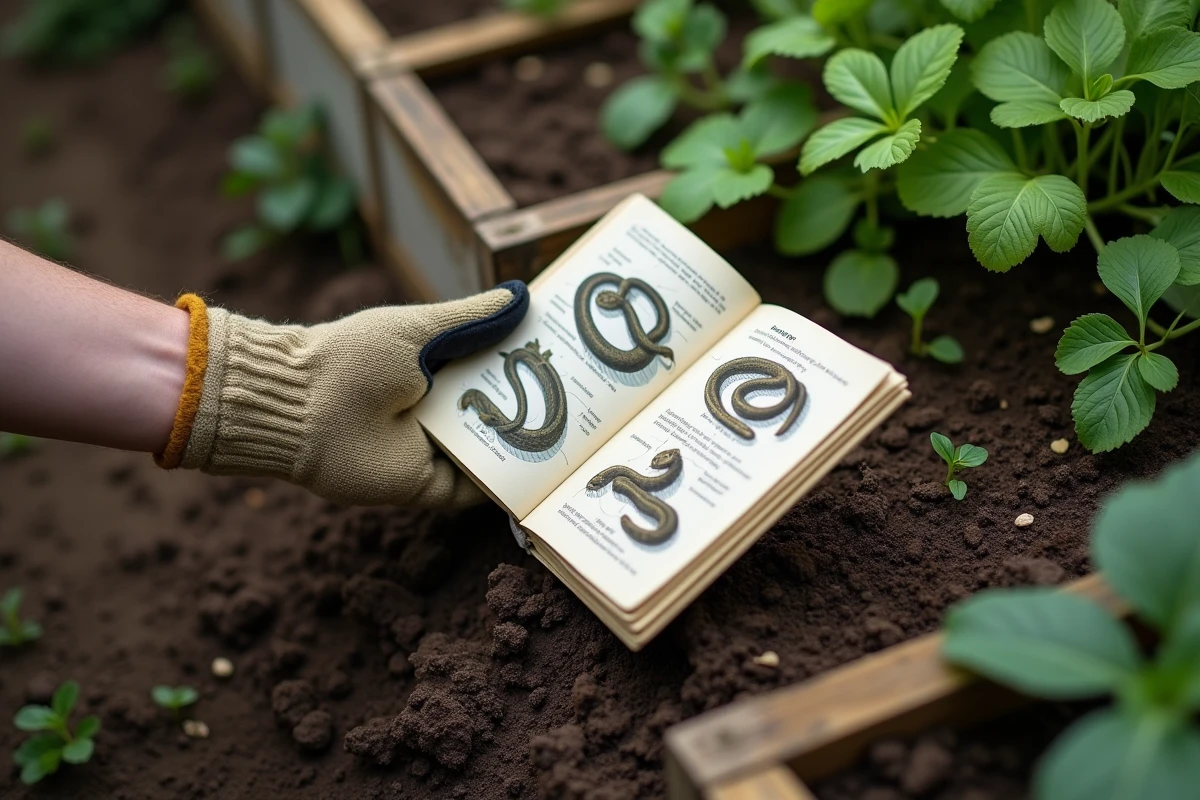
In practice, we advise never handling a snake dropping with bare hands and wearing gloves when gardening in areas where droppings have been spotted. This is not a reason to drive snakes away: the risk remains low if basic hygiene practices are followed.
Garden arrangements to maintain snakes and associated biodiversity
The presence of snake droppings in a garden indicates a functional ecosystem: available prey (rodents, slugs, amphibians), sufficient vegetation cover, and intact movement corridors. Preserving these conditions means maintaining the entire food chain.
Structures favorable to reptiles
- Piles of stones or dry stone walls exposed to the south, which serve as shelters and thermoregulation posts
- Piles of dead wood or branches left in place, providing cool shelters in summer and winter refuges
- Spontaneous vegetation areas at the edge of the vegetable garden, maintaining cover for prey (voles, lizards)
- Permanent or temporary water points (pond, buried saucer) attracting amphibians and aquatic snakes
Open compost attracts snakes for two reasons: the heat of fermentation and the concentration of micromammals. An active compost is a direct indicator of functional biodiversity in the garden. Avoid turning it abruptly during the breeding season (April to June) to limit disturbance to pregnant females.
Practices to avoid
Systematic close mowing removes movement corridors. Metaldehyde-based slug control products eliminate a food source and indirectly poison snakes through bioaccumulation. Fine mesh fencing around the garden blocks the movement of reptiles between neighboring plots.
All snake species present in mainland France are protected by law. It is prohibited to kill, capture, or relocate them. Six species of snakes coexist in certain departments, including five grass snakes and the asp viper, according to inventories by Vienne-Nature. The green and yellow snake remains the most common in gardens, while populations of the Aesculapian snake and aquatic snakes are declining.
Spotting and identifying snake droppings is an accessible naturalist gesture for any gardener. Each dropping confirms that a link in the food chain is functioning, from the soil to the top predators.