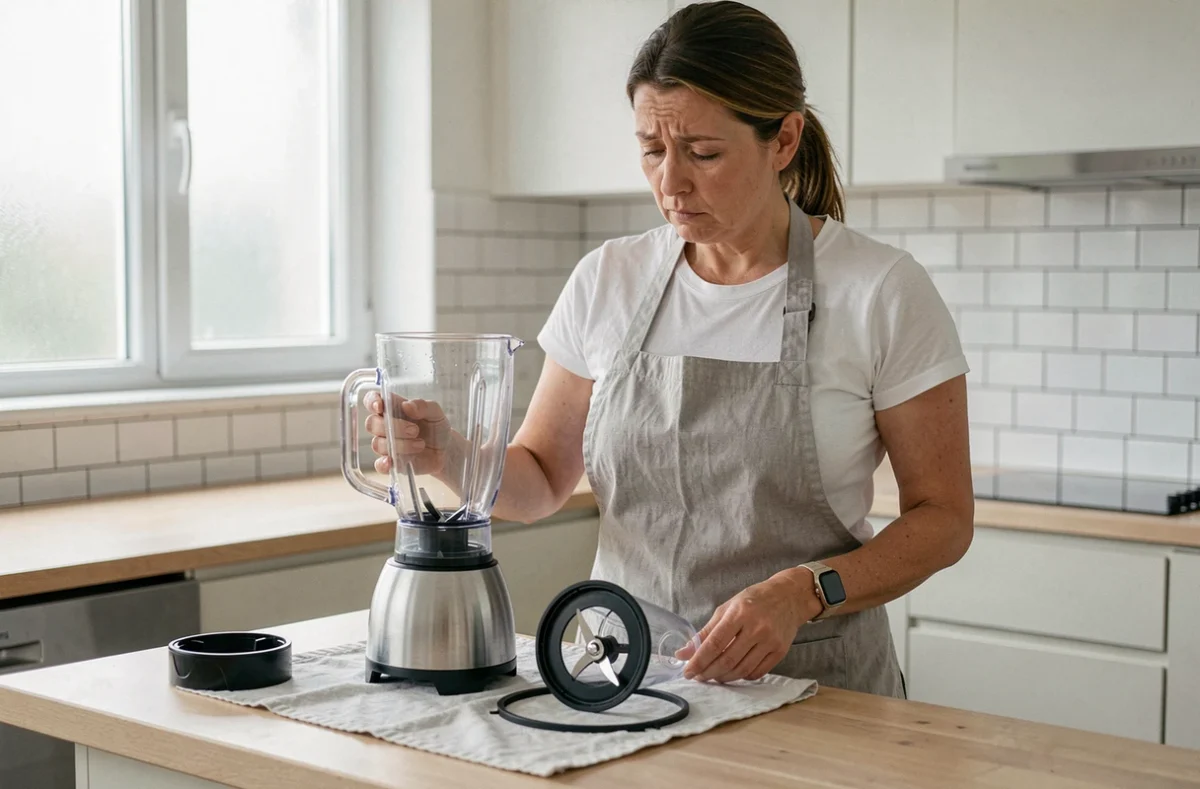
We pour the fruits into the bowl, turn on the maximum speed, and the blender spins in vain. The pieces remain whole, the motor grumbles, and the result looks like anything but a smoothie. Before replacing the appliance, several concrete checks can help understand why a non-heating blender is no longer blending properly and how to fix it without specialized tools.
Dull or blocked blades: the most common cause of a blender that no longer blends
When the motor runs but the food doesn’t break down, we first check the blades. On a blender used several times a week, the blades dull within a few months. The fibers from hard fruits, ice cubes, or seeds accelerate this wear.
To check, we unplug the device and remove the blade assembly from the bowl. If the cutting edges feel smooth to the touch or show chips, replacement is necessary. On most Moulinex models or other common brands, the blade assembly unscrews from the bottom of the bowl.
A separate but equally common issue involves a non-heating blender that no longer blends due to food residues stuck around the rotation axis. Wrapped fibers or dried pieces prevent the blade from turning freely. A thorough cleaning with an old toothbrush and hot water is often enough to resolve the issue.
Blender motor running slowly: overload or worn carbon brushes
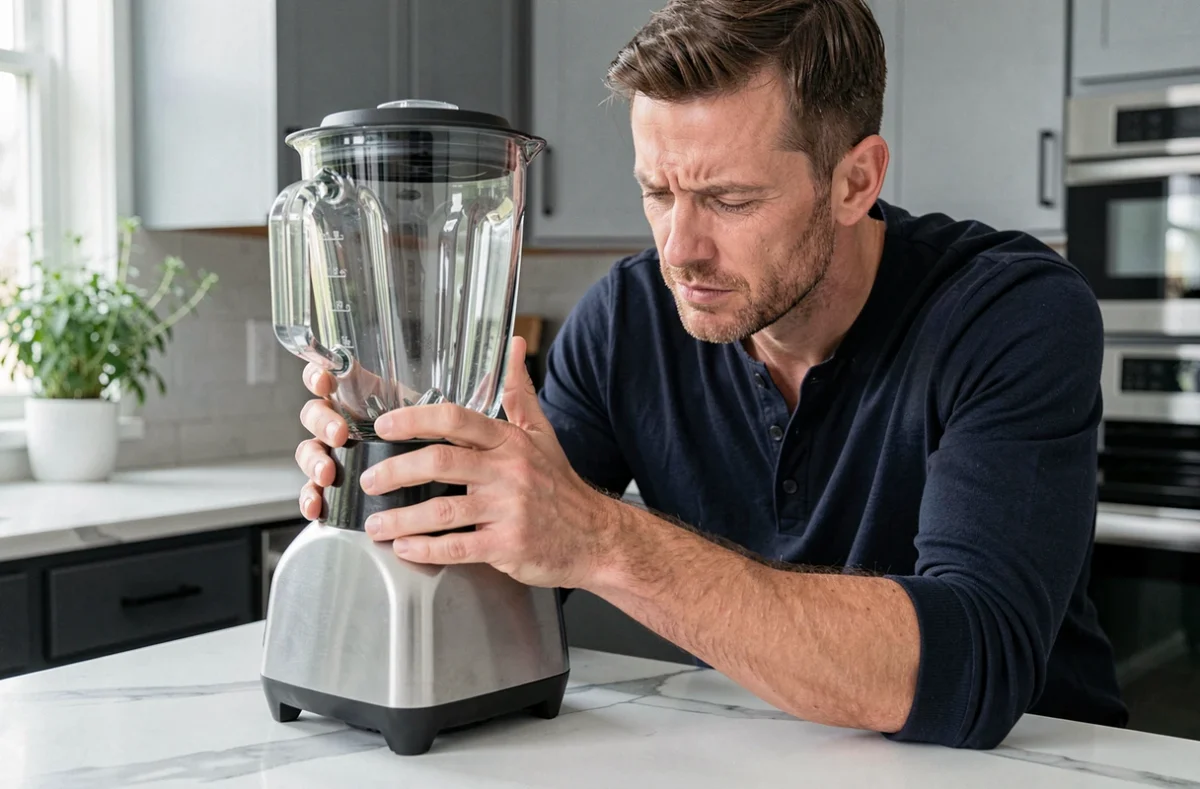
This symptom can be recognized by ear: the motor emits a dull sound, and the speed drops as soon as food is added. Two possibilities stand out.
Too many ingredients in the bowl
Filling the bowl beyond the maximum fill line forces the motor to work against excessive resistance. Reducing the amount of ingredients and adding liquid often immediately resumes blending in most cases. We proceed with small quantities, even if it means blending in two batches.
Worn motor brushes
On blenders equipped with a brushed motor (most entry-level and mid-range non-heating models), the carbon brushes wear out over time. When they become too short, the electrical contact becomes intermittent. The motor loses power, runs in jerks, or stops.
Accessing the brushes usually involves removing the base of the blender (a few crosshead screws). If their length is reduced to a few millimeters, we replace them. Motor brushes are inexpensive spare parts, available from specialized appliance parts retailers.
Broken drive between the motor and the blender blades
The bowl is placed on the base, the motor runs, but the blades do not move at all. This scenario points to the drive, the part that provides the mechanical link between the motor shaft and the blade assembly.
Depending on the models, this is a rubber or plastic coupler. This part absorbs shocks at startup and wears out by design. When the teeth of the coupler are rounded or cracked, the transmission no longer occurs.
- Remove the bowl and examine the coupler attached to the motor shaft (lower part): check the condition of the notches or drive teeth
- Compare with the new part from the manufacturer to confirm wear, as deformation can sometimes be subtle
- Replace the coupler by pulling it off the shaft, usually without tools
A new coupler restores normal blending in a few minutes. This part can be found by searching for the exact model reference on spare parts websites.
Bowl seal leaking and blender losing efficiency
A leak under the bowl during operation is not just a cleanliness issue. When the O-ring between the bowl and the blade assembly degrades, liquid seeps into the bearings. The direct consequence: the bearings seize and hinder the rotation of the blades.
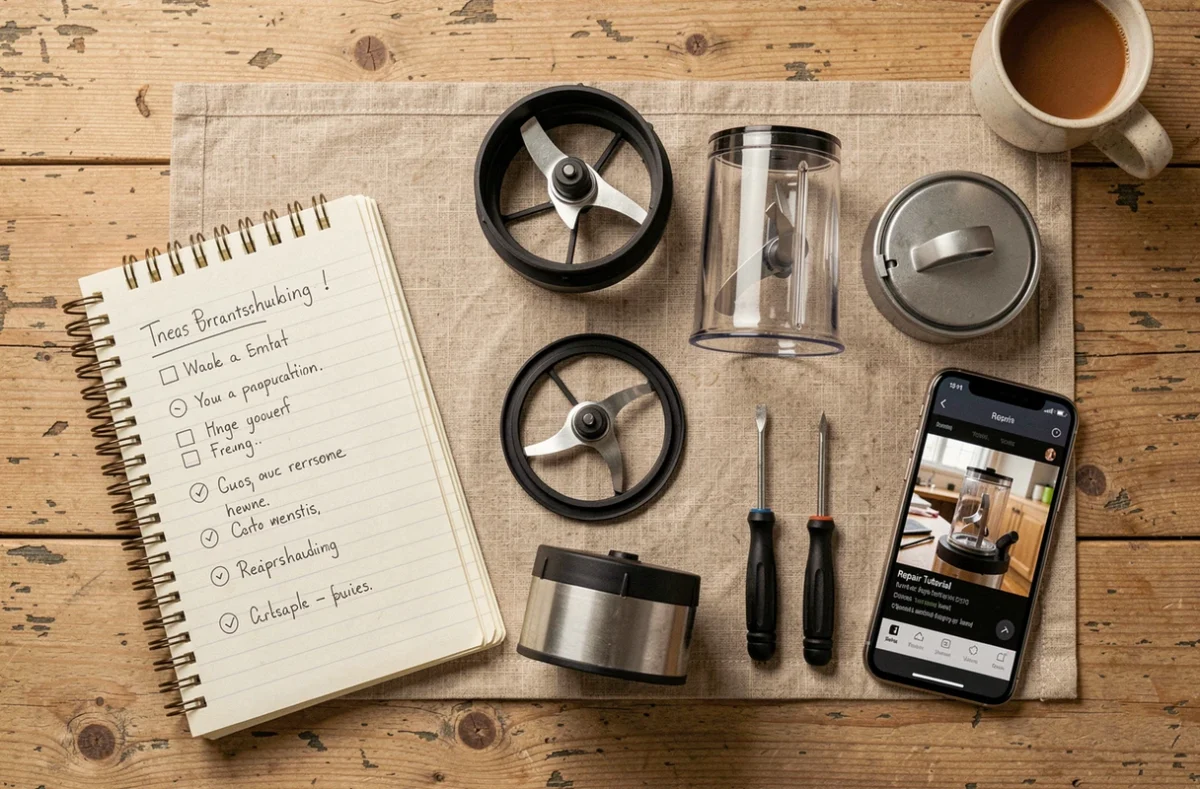
This problem can be detected by placing the bowl upside down on a towel after filling it with water. If drops appear around the base, the seal is to blame. The replacement is simple: unscrew the blade assembly, remove the old seal, and position the new one.
After changing the seal, we check that the blades turn freely by hand. If they resist, the bearings are already damaged, and the entire blade assembly must be replaced.
Repair bonus and warranty: what can be mobilized before buying a new blender
Before ordering parts, two quick checks can save time and money.
- If the appliance is less than two years old (or five years in some cases depending on the seller), the legal warranty of conformity covers the breakdown: contact the seller first, not the manufacturer
- The repair bonus scheme, managed by the Ministry of Ecological Transition, allows for an immediate discount at a QualiRépar certified repairer, provided the appliance is no longer under warranty
- Eligibility for the bonus depends on the appliance and the breakdown: checking with the certified repairer before traveling avoids an unnecessary visit
Blenders are not on the official list of devices subject to the French reparability index. To compare the ease of repair between models, we rely more on the availability of spare parts and the conditions published by the manufacturer.
A blade assembly, a drive coupler, a bowl seal: these three parts cover the vast majority of blending failures on a non-heating blender. Correctly identifying them before any expenditure remains the most cost-effective action.