
The French real estate market imposes a regulatory framework on individuals that becomes stricter each year. Successfully completing a local real estate project requires mastering technical, legal, and energy constraints that most buyers or sellers discover along the way. A real estate professional absorbs an increasing complexity that the legal framework makes risky for anyone acting alone.
Opposable EPC and rental prohibitions: the regulatory trap that changes the game
Since July 1, 2021, the energy performance diagnosis is legally opposable. An error in the EPC can engage the civil liability of the seller or the lessor. This evolution has transformed a document that was once indicative into a contentious piece of evidence.
For rental projects, the consequences are direct. Properties classified as G can no longer be subject to a new lease from January 1, 2025. Class F will follow in 2028, and class E in 2034. A landlord who rents out without checking the energy class of their property risks reclassifying the dwelling as “non-decent.”
A local professional integrates this framework from the start of the project. They can coordinate diagnostics, assess the rental feasibility of a property, and anticipate a schedule for energy renovation work before signing. Without this support, the risk is to finalize an acquisition whose rental profitability will be compromised in the short term by a rental prohibition.
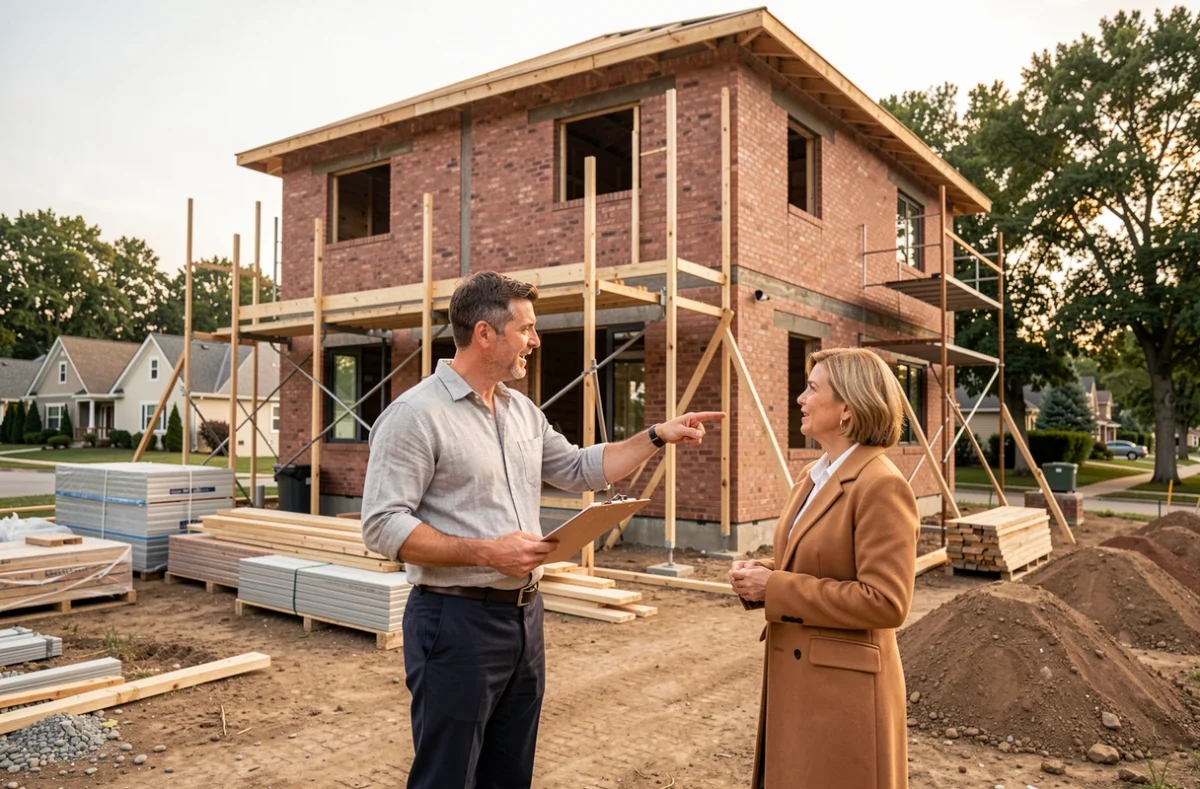
Local real estate project and knowledge of the area: what online data does not show
Listing portals provide access to prices per square meter, photos, and standardized descriptions. This apparent transparency masks significant discrepancies between the reality of a neighborhood and its digital representation.
A locally established professional knows about ongoing urban planning projects, road developments, seasonal nuisances, or parking constraints that affect a property’s value. They also know which areas are subject to municipal restrictions, particularly for tourist rentals.
The law of November 19, 2024, provides for specific energy obligations for certain furnished tourist accommodations subject to a change of use authorization, with a requirement that could go up to class D starting in 2034 for the affected properties. These authorizations vary from one municipality to another.
For those who wish to discover the services of Immobilier Barbe, this field expertise illustrates well what a local contact brings compared to a search conducted solely online.
Legal security of a real estate transaction: the role of the professional card
The professions of real estate agent, property manager, and condominium trustee are regulated by the Hoguet law of January 2, 1970. Practicing these activities requires obtaining a professional card, issued by the chambers of commerce and industry, which certifies moral conditions, qualifications, or professional experience.
This framework imposes several concrete guarantees on professionals:
- A professional liability insurance, which covers errors or omissions made in the course of the service
- A mandatory financial guarantee, which secures the funds deposited by clients (escrow, rents collected on behalf of third parties)
- A continuing education obligation, which requires regular updates of legal, tax, and technical knowledge
These guarantees do not exist in a transaction between individuals. A seller who drafts their own compromise or a lessor who directly manages their diagnostics has no safety net in case of error. The cost of a dispute, in time and money, generally far exceeds the fees of a professional.

Sale price estimation: a local calibration that influences the entire chain
Setting a sale price without local expertise often means positioning too high or too low. Both mistakes have measurable consequences. An overvalued property remains on the market, loses attractiveness, and ends up selling below its actual value after several price reductions. An undervalued property generates a direct loss for the seller.
A local professional calibrates the price based on recent transactions in the same area, taking into account criteria that automatic valuation algorithms do not capture: condition of the condominium, actual orientation of the property, quality of insulation, proximity to uncharted nuisances.
This precision in estimation has a chain effect. It shortens the selling time, reduces the number of unqualified visits, and secures the financing of the buyer, whose bank relies on the consistency of the price to grant the loan.
When the estimation conditions the feasibility of the project
For a buyer, the professional’s estimation also serves as a safeguard. It helps detect a property whose displayed price includes unperformed work or an energy class that will require short-term investments. The real cost of a property is not reflected in the listing but in the cross-analysis of the price, the EPC, and the technical condition.
Field feedback varies on the ability of online estimation tools to integrate these local parameters. Most operate on statistical averages, which smooth out the discrepancies between two streets in the same neighborhood.
Engaging a professional for a local real estate project is not merely a matter of added comfort. The tightening of energy obligations, the opposability of the EPC, and the complexity of municipal regulations turn each transaction into a technical exercise. The cost of error now exceeds that of support.