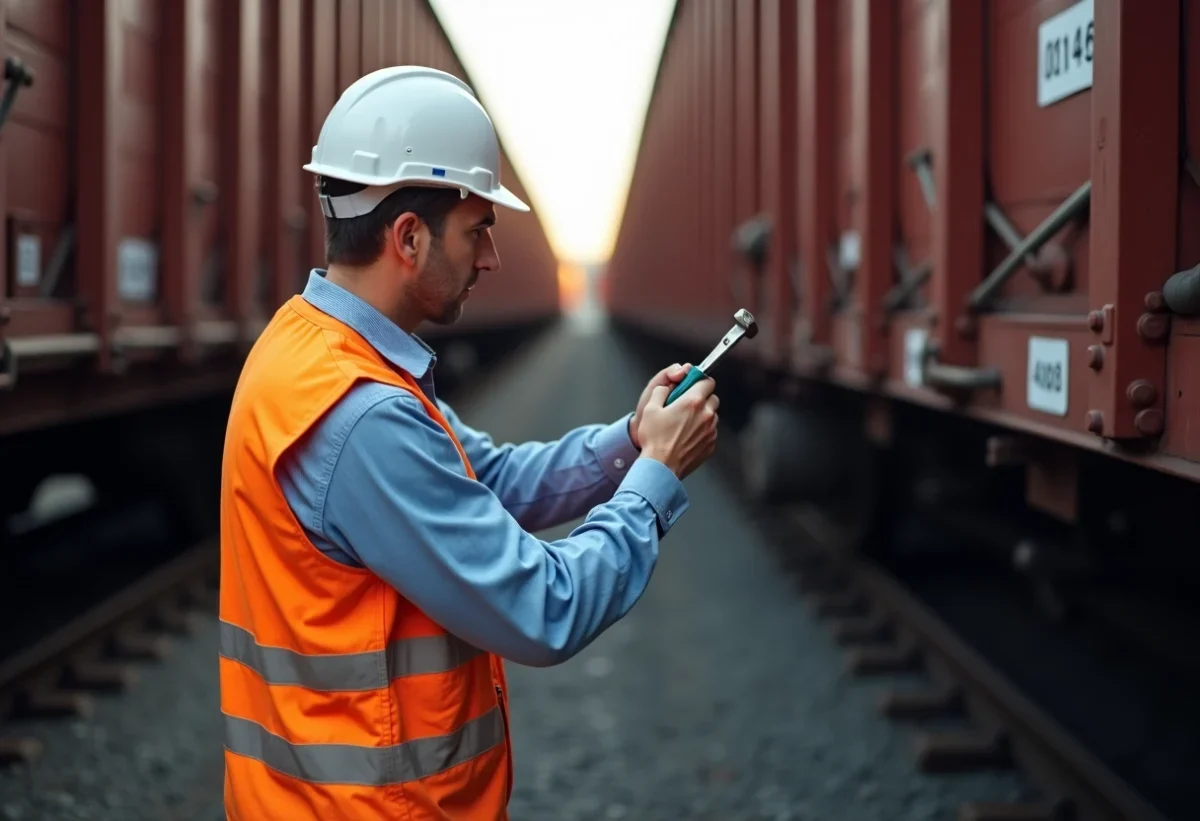
In the railway universe, the wagonist occupies a central role that is often unknown to the general public. Working behind the scenes, this professional ensures the preparation and distribution of wagons, thus guaranteeing the smooth running of logistics operations.
His tasks are not limited to the material management of wagons. The wagonist collaborates closely with train drivers, controllers, and maintenance teams to optimize routes and anticipate needs. His expertise and responsiveness are essential to avoid delays and ensure the safety of transported goods.
The missions and responsibilities of the wagonist
The wagonist, a key player in the railway sector, undertakes various vital missions. Among them, wagon maintenance proves to be fundamental. Responsible for the upkeep and inspection of wagons, he ensures that every component is in perfect working order. This includes monitoring braking systems, couplings, and safety equipment.
Jean-Paul, a wagonist for fifteen years, perfectly illustrates the importance of this profession. Throughout his career, he has gained invaluable expertise, notably participating in the WorldSkills competitions dedicated to technical professions. The skills acquired by Jean-Paul allow him to anticipate breakdowns and ensure the safety of goods and passengers.
The role of the wagonist is not limited to maintenance. He must also manage the rotation schedules of the wagons, taking into account logistical constraints and commercial imperatives. The use of digital tools, such as the Wagonist tool for information, facilitates this task by providing an overview of needs and availability.
The wagonist can advance to positions of responsibility. With experience, he can become a technical manager or trainer, passing on his knowledge to the new generation of professionals in the railway sector. Versatility and adaptability are essential qualities for this constantly evolving profession. 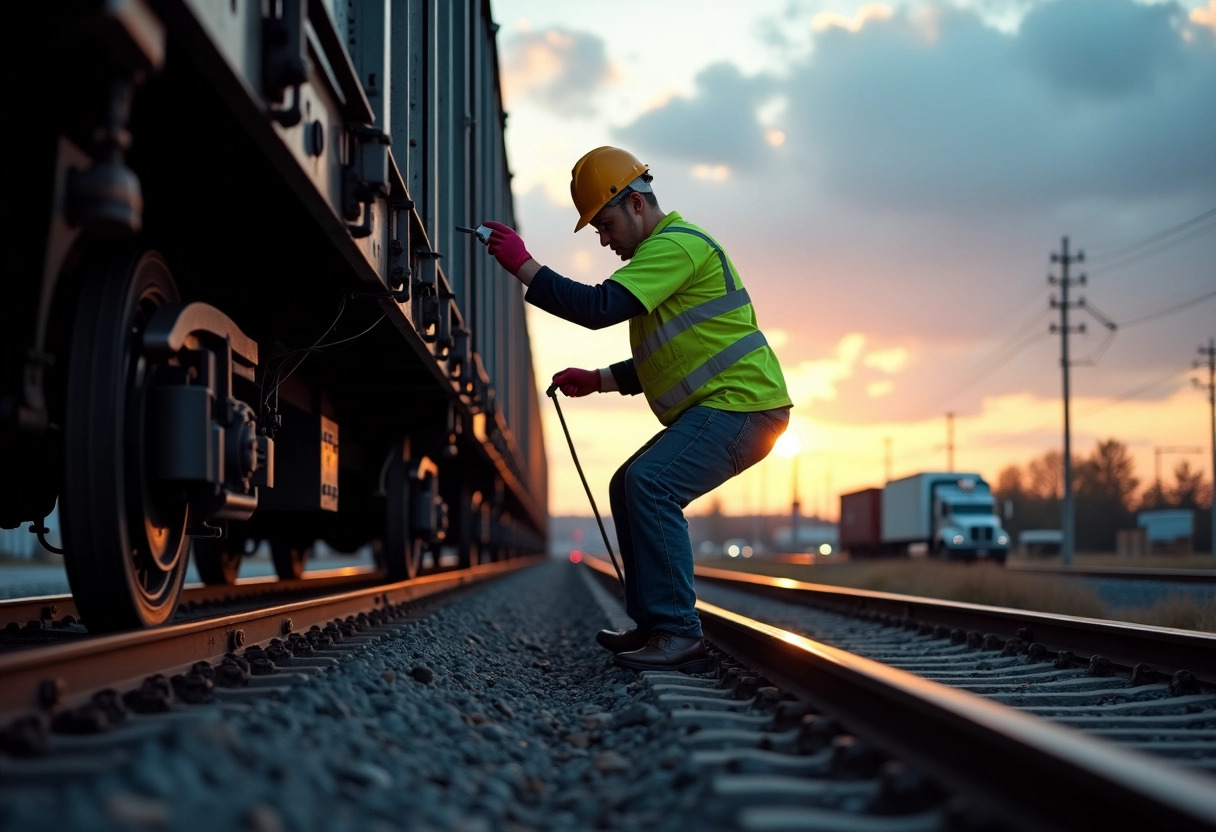
The necessary skills and training
To become a wagonist, several skills and training are required. Specialized training is essential to acquire the technical knowledge necessary for the upkeep and maintenance of wagons.
Technical skills
The wagonist must master various technical fields:
- Braking and safety systems
- Coupling mechanisms
- Diagnostic and repair technologies
These skills allow for the quick identification of breakdowns and ensure the proper functioning of railway equipment.
Initial and ongoing training
Future wagonists undergo initial training in mechanics or electrotechnics, often provided by specialized centers. This training allows them to acquire a solid foundation before entering the railway sector.
| Type of training | Content |
|---|---|
| Initial | General mechanics, electrotechnics |
| Ongoing | Diagnosis of railway systems, new technologies |
Throughout their careers, wagonists must also follow ongoing training to keep up with technological and regulatory developments.
Career prospects
With experience, wagonists can advance to positions of responsibility. They can become technical managers or trainers, allowing them to pass on their knowledge to new generations of professionals. Versatility and adaptability are essential qualities for this constantly evolving profession.
The wagonist, at the heart of the railway sector, plays a fundamental role in the safety and efficiency of transport.