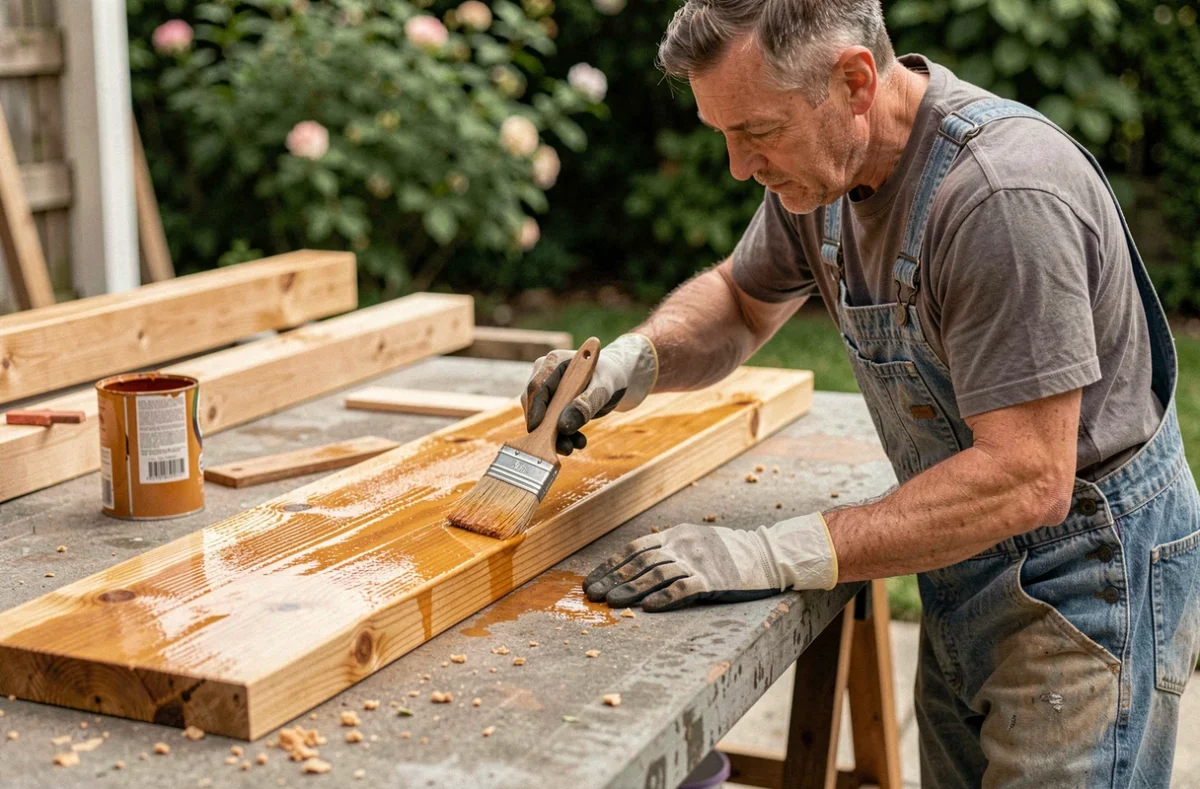
The Parkside polyurethane stain, sold under the Lidl brand, is a wood finish intended for both indoor and outdoor use. Its formulation is associated with the manufacturer BAUFIX, but the available commercial sheets do not detail the solid content, precise coverage, or the chemical classification of the resin used. Before comparing this product to specialized brands, it is essential to understand what the term “polyurethane” on the label encompasses and what it implies for the actual durability of the treatment.
Polyurethane resin on a stain: what the label doesn’t always say
The word polyurethane on a can of stain refers to the nature of the binding resin. This resin forms a flexible film after drying that is more resistant to abrasion and moisture than a conventional alkyd resin. However, the concentration of resin must be sufficient to provide lasting protection.
The BAUFIX commercial sheets listed by ExcellentChoix and Meilleurs-5 mention resistance to weather and UV, but without providing precise technical data on the formulation. In other words, the mention of “polyurethane” indicates a type of binder, not a guaranteed level of performance. Two stains with the same label can behave very differently depending on their solid content and their ability to penetrate the wood fibers.
To form an opinion on the Lidl Parkside polyurethane stain, it is better to observe the product’s behavior after several months of exposure rather than relying solely on the arguments of the product sheet.
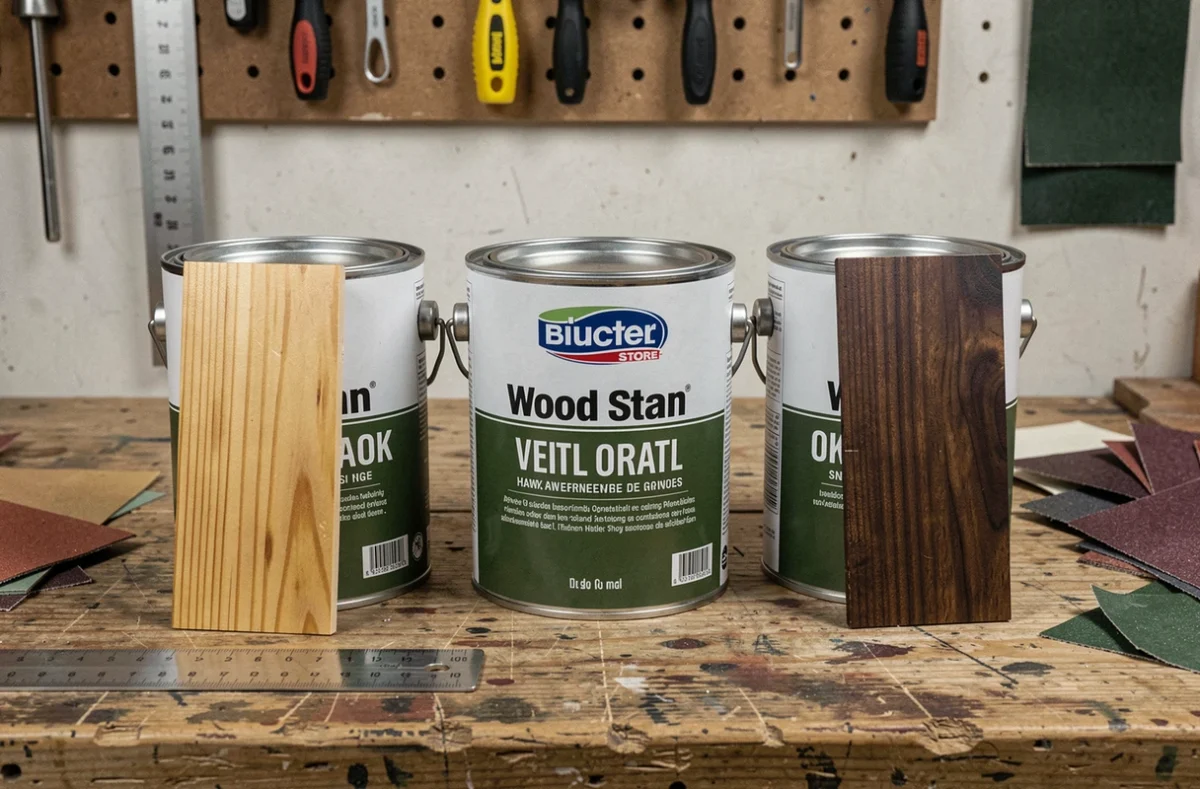
Parkside stain versus specialized brands: the real performance gaps
The main advantage of the Parkside stain remains its price, significantly lower than that of V33 or Xyladecor references. The question is whether this price gap translates into a proportional difference in durability.
Pentration and longevity
A specialized brand stain generally has a higher solid content and penetration documented by standardized tests. The Parkside stain, lacking a detailed technical sheet, does not allow for this direct comparison. Feedback from DIYers indicates satisfactory performance on vertical wood (shutters, cladding) but more mixed results on horizontal surfaces exposed to standing rain.
Horizontal surfaces put more strain on the stain than vertical surfaces, because water stagnates there instead of running off. This factor weighs more heavily than the chosen brand.
Colors and visual finish
The rosewood shade of Parkside is the most common. The initial finish is satisfactory, with a warm coloration that reveals the wood grain. The point of caution is graying: without a high-performance UV filter, the shade turns gray in a few seasons. Brands like V33 or Bondex offer stains with UV filters whose performance is better documented.
Application conditions: the often underestimated factor
Research by Perplexity on this subject confirms: application conditions often weigh more than brand choice. A high-end product applied to damp or poorly sanded wood will perform worse than an entry-level stain applied correctly.
The parameters to respect for maximum durability:
- The wood must be dry, clean, and degreased. A too-high moisture content prevents the resin from penetrating, regardless of the brand
- The application temperature must remain moderate, avoiding frost and extreme heat, to prevent too rapid surface drying that traps moisture underneath
- Two thin coats are better than one thick coat: the stain should penetrate the wood, not form a surface film that will eventually peel
- A light sanding between coats improves the adhesion of the second application
Applying the Parkside stain while respecting these principles allows for the best results, even if its formulation is less concentrated than that of a specialized product.
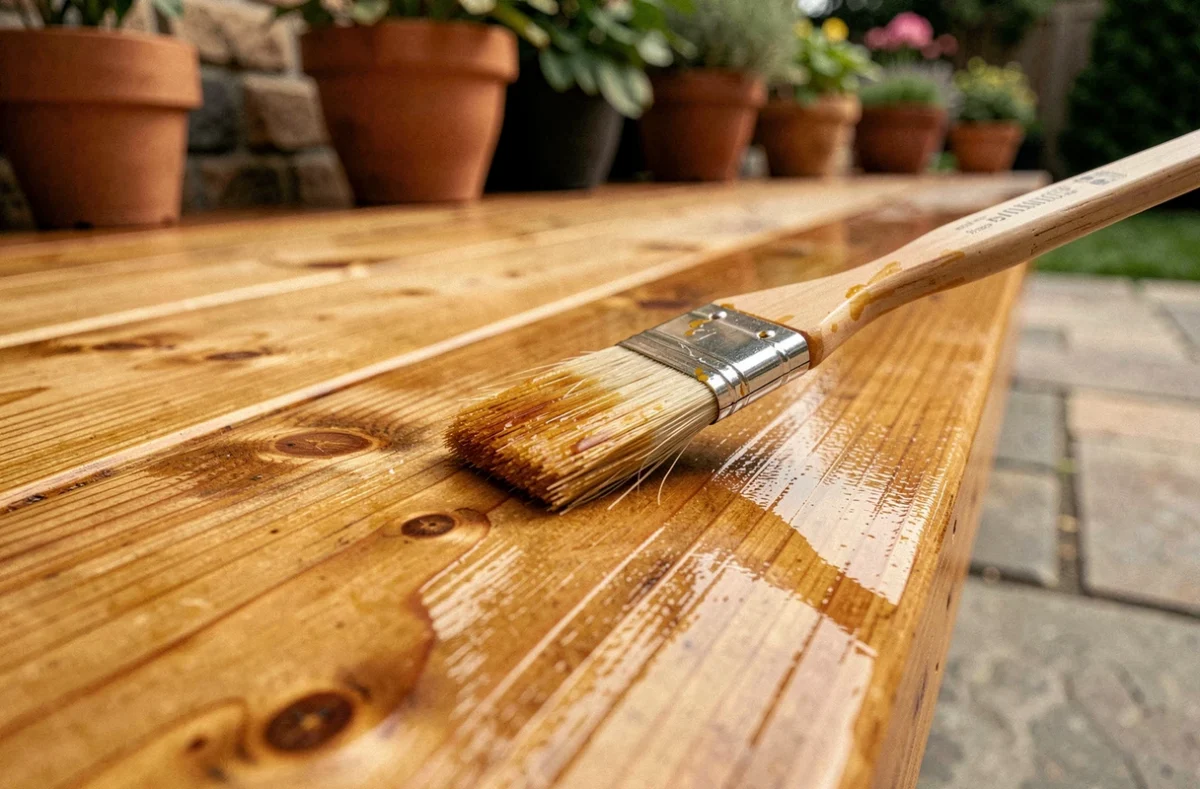
Wood usage class and limitations of a surface stain
A stain never replaces a structural treatment of wood. The NF EN 335 standard defines usage classes based on exposure to moisture. Class 1 or 2 wood (dry or sheltered indoors) can suffice with a stain as a finish.
Class 3 wood (outdoor, not in contact with the ground) requires suitable natural durability or prior deep treatment, in accordance with NF EN 351. Applying Parkside stain on wood of poor durability exposed to the elements does not turn it into resistant wood.
The stain protects the surface, not the structure. Investing in wood suitable for the intended exposure, then applying a stain as a finishing layer, remains the only effective long-term approach.
Parkside stain: for whom and for what use
The Parkside polyurethane stain is suitable for common DIY projects on sheltered or vertical wood: shutters, gates, garden sheds protected by an eaves. Its price makes it interesting for large surfaces where the cost per liter matters, and for DIYers who are willing to renew the application more frequently.
For a terrace, a post in contact with the ground, or a heavily exposed structure, the choice of wood and its prior treatment takes precedence over the stain brand. A more technical product (V33 High Protection, Xyladecor Long-Lasting Stain) is justified by its standardized documentation and proven performance over several seasons.
The quality-price ratio of Parkside is not bad, provided it is not asked to deliver what no entry-level stain can offer: long-lasting protection without renewal on heavily used surfaces.