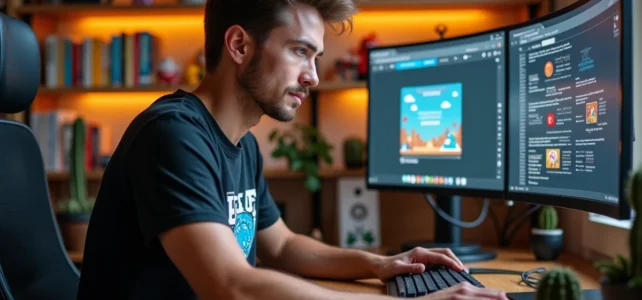
Geek culture refers to a set of practices and passions centered around video games, science fiction, comics, cosplay, and computer hardware. Far from being just a hobby, this universe now structures a massive part of the content distributed online, from streaming series to specialized YouTube channels. Understanding how to organize your monitoring and deepen your interests in this field requires mastering a few concrete benchmarks.
Geek newsletters and podcasts: monitoring that replaces portals
Tech and pop culture news sites remain references, but an increasing part of geek monitoring now comes through shorter and more targeted formats. Specialized newsletters and niche podcasts have become leading sources for enthusiasts who want to filter out the noise.
Recommended read : News and Analysis: Understanding the Major Issues of the Contemporary World
Formats like The Vergecast (tech/culture podcast) or the Garbage Day newsletter (internet culture and memes) are regularly cited by tech journalists and content creators as tools for daily monitoring. The principle is simple: a human curator selects, comments on, and contextualizes the information, something an RSS feed or an automatic aggregator does not do.
To follow geek news in French, sites like Bordel de Nerd support this editorial curation logic by covering topics ranging from video games to genre cinema, with a tone that speaks directly to enthusiasts.
Recommended read : Discover the best destinations and tips for planning your trips in Europe
The advantage of this type of monitoring lies in its regularity: a weekly episode or a bi-daily newsletter imposes a manageable reading rhythm, unlike the endless scroll of a news portal where information drowns in volume.

Streaming hybridization and nerd culture: what it changes for enthusiasts
Series themed around video games, sci-fi, or fantasy now occupy a visible share of the audience top charts on Netflix, Disney+, and Prime Video. This hybridization between geek culture and mainstream content alters the way enthusiasts consume and discuss their favorite universes.
Specifically, an adaptation like that of a video game license into a live-action series generates a dual flow of content: traditional reviews (film press, YouTube) and lore analyses by specialists of the original game. These two circuits coexist and feed off each other.
Consequences for daily monitoring
For an enthusiast, this hybridization means that one must monitor both streaming platform announcements and fan communities. A sci-fi series trailer posted on YouTube can trigger dozens of analysis videos on specialized channels within a few hours.
The reflex to adopt: cross-reference sources. YouTube channels focused on film/series criticism (like Culture Geek, which has over a thousand videos) offer a different perspective than print media articles. Multiplying monitoring formats avoids thematic blind spots.
Geek micro-influence: from hobbyist to structured creator
The professionalization of geek culture enthusiasts on Twitch, YouTube, and TikTok represents a recent turning point. More and more creators are structuring their activities around recurring formats:
- Hardware reviews (testing PC components, gaming peripherals, VR headsets) with detailed benchmarks, published with each product release
- Lore breakdowns, where a creator analyzes the internal mythology of a video game or fictional universe in long videos
- Practical guides (setup optimization, configuration comparisons) that are gradually replacing traditional forums
This activity is monetized through subscriptions, tips, and partnerships with tech brands. Reports from Twitch, YouTube, and Patreon creators published in recent years confirm this trend: “Geek advice” now forms a niche economy in its own right.
The key takeaway for an enthusiast consuming this content: the quality of a review or guide depends on the creator’s transparency regarding their partnerships. A benchmark sponsored by a graphics card manufacturer does not hold the same value as an independent review funded by subscribers.

Cosplay, conventions, and nerd culture off-screen
Geek culture is not limited to the digital realm. Cosplay (the creation and wearing of costumes of fictional characters) remains one of the most visible practices at conventions, and its technicality has significantly increased in recent years.
Cosplayers today use materials like EVA foam, 3D printing, and embedded electronics (LEDs, servomotors) to produce pieces that rival movie props. This technical dimension makes cosplay a convergence point between pop culture and engineering skills.
Choosing your events
Geek conventions vary greatly in size and orientation. Here are a few criteria for selecting those worth attending:
- The presence of guests related to your specific interests (voice actors, game designers, comic book authors) rather than a general programming
- The existence of spaces dedicated to practical demonstrations (cosplay workshops, video game tournaments, tabletop role-playing sessions)
- The size of the event, which affects accessibility: medium-sized conventions often offer a better content-to-attendance ratio than mega-events
A common mistake is to try to cover everything. Focusing on two or three areas of interest per convention allows for real benefits, whether in terms of discoveries or encounters.
Digital skills and geek culture: an underestimated link
Geek practices develop transferable skills to the professional domain. Managing a Minecraft server, modding a video game, or setting up a home network for streaming are concrete technical learnings in networking, programming, or project management.
Studies on employment in the digital sector highlight that skills acquired in a passionate context are increasingly valued by tech recruiters. The boundary between geek hobby and technical training is blurring, especially for junior profiles who document their personal projects on GitHub or in videos.
The most useful advice remains to document what you do. A well-presented modding project on an online portfolio carries more weight than an abstract line on a resume. Geek culture produces skills, provided they are made understandable for those who do not share the same reference universe.